
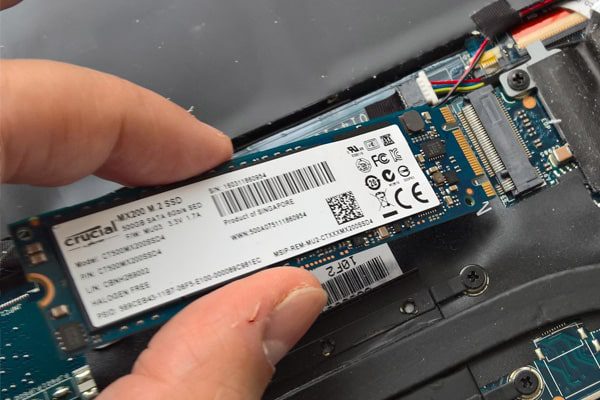
Why SSD Data Destruction Is Different
Unlike hard disk drives (HDDs), SSDs store data in flash memory chips using complex wear-leveling and over-provisioning algorithms. This architecture makes many legacy data destruction methods ineffective or unverifiable for SSDs. Simply put: what works for HDDs does not work for SSDs.
What Does NOT Work for SSD Data Destruction
Degaussing
- Ineffective: Degaussing uses a strong magnetic field to erase data from magnetic media. SSDs have no magnetic components—degaussing does nothing to SSDs.
- Authoritative Source: NSA Media Destruction Guidance
Basic Overwriting (Single/Multiple Passes)
- Unreliable: Overwriting data on SSDs is not guaranteed to sanitize all data due to wear-leveling, bad block management, and over-provisioned areas that are inaccessible to standard overwrite commands.
- Obsolete Standards: The DoD 5220.22-M wipe method is outdated and not recommended for SSDs. See NIST SP 800-88 r1 and Garner Products.
Formatting or Deleting
- Dangerous Myth: Standard formatting or deleting files only removes pointers, not the actual data. Data remanence persists and can be recovered with forensic tools.
What Works: NIST-Approved SSD Data Destruction Methods
1. Physical Destruction (Shredding or Pulverization)
- Gold Standard: Physically destroying SSDs—via industrial shredding or pulverization—renders data completely irrecoverable.
- Compliance: Meets the “Destroy” requirement in NIST SP 800-88 r1 and NSA EPLs.
- Best Practice: Use NAID AAA certified providers who guarantee particle size reduction and provide a full chain of custody. See NAID AAA Certification.
2. Cryptographic Erasure
- How It Works: If SSDs are encrypted with a strong, unique key, destroying the key (cryptographic erase) renders all data unreadable.
- Limitations: Only effective if encryption was properly implemented from the start. Not all SSDs support this feature.
- Reference: NIST SP 800-88 r1, IEEE 2883-2022
3. Manufacturer Secure Erase Commands
- Conditional: Some SSDs support built-in secure erase commands that trigger a firmware-level wipe.
- Risks: Effectiveness varies by manufacturer and model. Verification is essential. Not accepted for the highest security/compliance needs.
Best Practices for Secure SSD Data Destruction
1. Always Identify Media Type
- Critical Step: Never assume a device is an HDD. SSDs require different handling and destruction protocols.
2. Follow NIST SP 800-88 r1 Guidelines
- Standard of Care: Use NIST SP 800-88 as your baseline for all media sanitization decisions. Read the official guidelines.
3. Use Certified, Audited Providers
- NAID AAA Certification: Only trust vendors with NAID AAA Certification for SSD destruction. This ensures rigorous, audited processes and unbroken chain of custody. Learn more.
4. Demand Full Chain of Custody and Documentation
- Proof of Compliance: Require serialized tracking, GPS-monitored transport, and a detailed Certificate of Destruction listing all SSD serial numbers, destruction method, date, and witness signature.
5. Never Rely on Degaussing or Basic Overwriting for SSDs
-
NIST SP 800-88 r1 Appendix A explicitly excludes degaussing from approved SSD sanitization methods (degaussing depends on a magnetic medium; SSD flash storage is non-magnetic). The same Appendix flags single- and multi-pass overwriting as unverifiable for SSDs because wear-leveling and over-provisioning regions are inaccessible to the host overwrite command. The only NIST SP 800-88 r1 method categories that apply to SSDs are Purge (cryptographic erasure under verified SED + FIPS 140-2/140-3 conditions) and Destroy (physical destruction to particle size ≤ 2 mm). Capability sentences on procurement responses should state the method category, not the outcome.
6. Consider Environmental Responsibility
- Responsible Recycling: Ensure destroyed SSDs are processed by R2v3 or e-Stewards certified recyclers. R2v3 Standard
SSD Data Destruction Methods: What Works and What Fails
| Method | HDDs | SSDs | NIST 800-88 Approved for SSDs? | Notes |
|---|---|---|---|---|
| Degaussing | Yes | No | No | Ineffective for SSDs |
| Basic Overwriting | Yes | No | No | Unreliable due to wear-leveling |
| Cryptographic Erasure | Yes | Yes | Yes (if implemented properly) | Only if strong encryption and key management in place |
| Manufacturer Secure Erase | Yes | Yes | Conditional | Must be verified; not always reliable |
| Physical Shredding/Pulverizing | Yes | Yes | Yes | Gold standard for SSD destruction |
Compliance and Regulatory Considerations
- HIPAA: Requires covered entities to render PHI on SSDs “unreadable, indecipherable, and otherwise unable to be reconstructed.” HHS HIPAA Guidance
- GLBA, PCI DSS, GDPR: All require secure destruction of sensitive data. Physical destruction or cryptographic erasure are the only defensible options for SSDs.
- NIST SP 800-88 r1: The definitive standard for media sanitization. Read more
Frequently Asked Questions
What is the most secure way to destroy data on an SSD?
The most secure and universally accepted method is the NIST SP 800-88 r1 Destroy method category, which for SSDs means industrial shredding or pulverization to particle size ≤ 2 mm, performed by a NAID AAA-certified provider. This method category produces a defensible audit-evidence package: serialized chain of custody, witness mode, and a Certificate of Destruction listing each SSD’s serial number, the destruction date, the method category, and the NAID AAA Certification reference number.
How do you destroy NVMe and M.2 SSDs differently from 2.5-inch SSDs?
The destruction method category is identical (NIST SP 800-88 r1 Destroy or Purge), but the equipment differs. Standard 2.5-inch SATA SSDs and 3.5-inch HDDs can be processed in dual-feed shredders. M.2 (typically 2280) and U.2 NVMe SSDs require dedicated small-form-factor SSD shredders or pulverizers calibrated to particle size ≤ 2 mm to ensure all flash chips are individually destroyed. BGA-soldered SSDs on enterprise motherboards are typically destroyed at the board level (whole-board shred), with the asset-retirement record noting the integrated form factor. Data Destruction Inc. NAID AAA-certified workflow handles all four form factors with appropriate equipment matching.
Does HIPAA, PCI DSS, or GLBA specify a particle size for SSD destruction?
None of HIPAA 45 CFR §164.310(d)(2), PCI DSS v4 Requirement 9.4, or GLBA 16 CFR Part 314 specifies a particle size directly. They reference NIST SP 800-88 r1 (or its predecessor) as the operating standard. NIST SP 800-88 r1 Appendix A specifies industry-standard particle-size targets for the Destroy method category: ≤ 6 mm for HDDs and ≤ 2 mm for SSDs (including NVMe and M.2 form factors). NAID AAA-certified Destroy workflows are calibrated to these targets and are verified annually by i-SIGMA third-party audit.
Does degaussing work for SSDs?
No. Degaussing is completely ineffective for SSDs because they do not use magnetic storage. Only physical destruction or cryptographic erasure are effective.
Can I securely erase an SSD by overwriting it?
No. Due to wear-leveling and inaccessible memory areas, overwriting does not guarantee all data is removed from an SSD. NIST SP 800-88 r1 does not recommend basic overwriting for SSDs.
Is cryptographic erasure a reliable method for SSD destruction?
Cryptographic erasure falls under the NIST SP 800-88 r1 Purge method category and is defensible only when three conditions are met:
(1) the SSD was encrypted from initial provisioning under a self-encrypting-drive (SED) controller compliant with FIPS 140-2 or the successor <strong>FIPS 140-3</strong> (or ISO/IEC 19790 internationally);
(2) the encryption key is destroyed under a verified key-zeroization workflow; and
(3) the verification step is documented in the Certificate of Destruction. If any of these three conditions cannot be satisfied (legacy non-SED SSDs, customer-managed key without zeroization, or absent verification), the only defensible option is the NIST SP 800-88 r1 Destroy method category (physical destruction).
What documentation should I receive after SSD destruction?
You should receive a detailed Certificate of Destruction listing each SSD’s serial number, the destruction method used, date, location, and a witness signature. This is your legal proof of compliance.
Are there compliance standards that specify SSD destruction methods?
Yes. NIST SP 800-88 r1, HIPAA, GLBA, PCI DSS, and GDPR all require secure destruction of sensitive data. For SSDs, only physical destruction or cryptographic erasure are considered defensible.
Can SSDs be reused after secure erasure?
If cryptographic erasure or manufacturer secure erase is properly implemented and verified, SSDs may be reused. However, for high-assurance environments, physical destruction is preferred.
How do I verify that an SSD has been securely destroyed?
Use a certified provider who offers serialized tracking, witnessable destruction, and a detailed Certificate of Destruction. Physical destruction is the only method that guarantees irrecoverability.
What environmental standards should be followed for SSD destruction?
Ensure your provider recycles destroyed SSDs according to R2v3 or e-Stewards standards for responsible e-waste management.
Why is NAID AAA Certification important for SSD destruction?
NAID AAA Certification, administered by i-SIGMA (the International Secure Information Governance & Management Association), is the procurement-defensible operating-procedure standard for data-destruction service providers. It is the only certification that combines:
(1) annual third-party on-site audit of the destruction facility and mobile fleet;
(2) background-checked personnel to a documented screening standard;
(3) witnessed destruction modes (continuous video, witness escort, or remote witness);
(4) sealed-bin chain of custody; and (5) particle-size verification for the Destroy method category. For SSDs specifically, the NAID AAA scope covers SSD shredder calibration to particle size ≤ 2 mm and SSD-specific equipment (different from HDD shredders calibrated for 3.5-inch platters).
For enterprises, secure SSD destruction is not optional—it is a regulatory, legal, and reputational imperative. Rely on NIST SP 800-88 r1, demand NAID AAA certified processes, and never settle for outdated or unverifiable methods. For expert guidance and certified SSD destruction services, contact Data Destruction, Inc. today.