
MEDIA SHREDDING
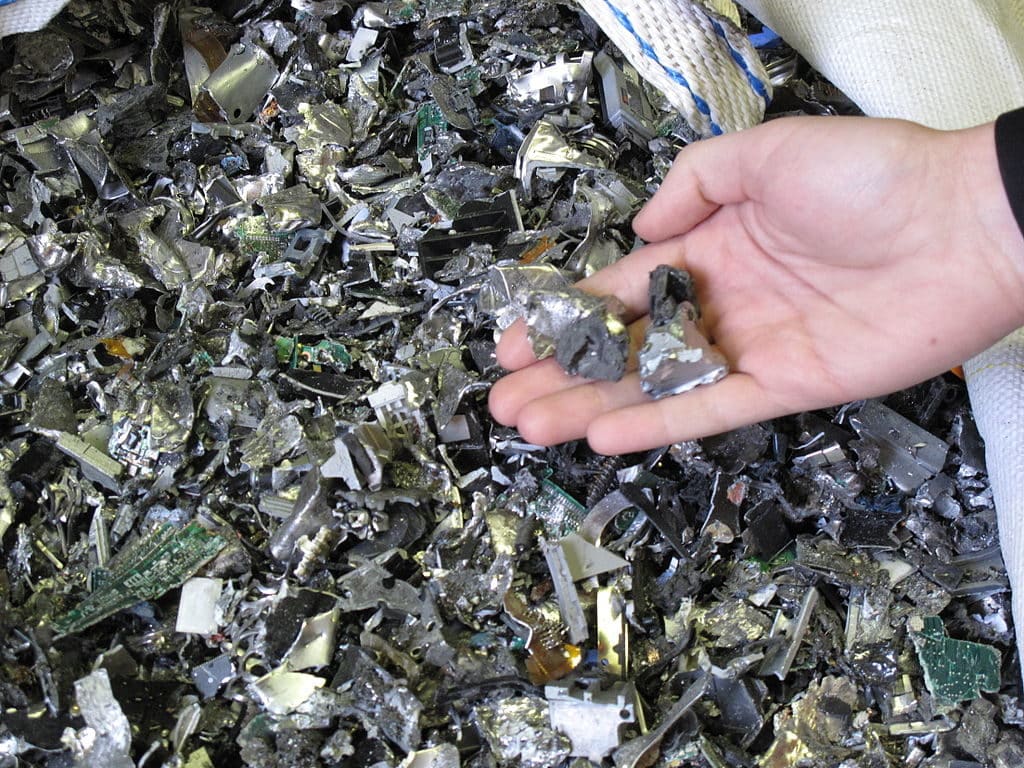
Media shredding physically destroys every format your data lives on, including backup tapes, optical discs, USB and flash media, memory cards, and hard and solid-state drives, so the data cannot be read, reconstructed, or recovered. Data Destruction Inc. shreds mixed media to NIST SP 800-88 r2 under documented chain of custody.

TOP 10 WAYS TO PROTECT YOUR PRIVACY NOW!
DOWNLOAD YOUR FREE GUIDE
Storage Media Shredding Related services
Media shredding is one method inside our hard drive destruction cluster. When your inventory is dominated by a single format, or when you need a different method or service mode, the pages below cover the adjacent options. Each one returns the same audit-grade documentation, and each links back to media shredding for mixed-format jobs.

HARD DRIVE SHREDDING
When the bulk of your inventory is spinning hard drives rather than mixed media, dedicated hard drive shredding reduces platters to an unrecoverable particle size and returns the same certificate package. Choose it for high-volume, drive-only retirement where you do not need to process tapes, discs, or flash in the same run.

SSD Shredding
Solid-state drives and flash store data at far higher density than magnetic platters, so they require a finer particle size. This service shreds SSDs and flash to the 2 mm class that NIST SP 800-88 r2 and IEEE 2883-2022 specify for solid-state media, which standard drive shredding does not guarantee.

Tape Degaussing
When magnetic backup tapes will be reused rather than destroyed, high-energy degaussing erases them to a reusable state instead of reducing them to fragments. Choose degaussing for tape reuse, and media shredding when the tapes are leaving your control permanently.

Hard Drive Disposal and Recycling
The end-to-end disposal workflow, pairing certified destruction with responsible downstream recycling of the shredded material. Choose it when you need both the data-destruction certificate and a documented recycling stream for environmental or ESG reporting.
What Counts as Media, and the Method Each Format Requires
Media shredding is broader than hard drive destruction because failure modes differ by format. A degausser that erases a magnetic tape does nothing to a solid-state chip. A reformat or a single-pass wipe leaves optical and flash data intact. Shredding is the one technique that applies across every format, because it destroys the physical carrier rather than the logical data. Each format below maps to a Destroy-category outcome under NIST SP 800-88 r2 (PDF) and to a dedicated destruction service.
Media type | Why deletion or reuse fails | Shredding outcome | Dedicated service |
|---|---|---|---|
Hard disk drives | Reformatting leaves platter sectors readable by forensic tools | Platters reduced to fragments | |
Solid-state drives and flash | Wear-leveling and over-provisioning hide cells from overwrite | Chips shredded to a fine particle size | |
Backup tapes (LTO, DLT, reel-to-reel) | Tapes are archived for years and rarely indexed | Ribbon and shell pulverized | |
Optical discs (CD, DVD, Blu-ray) | The data layer survives scratching and snapping | Disc destroyed to unreadable fragments | |
USB and memory cards | Small, portable, trivially copied before disposal | Reduced to unreadable shards |
Magnetic tape carries the highest hidden liability. Organizations generate disaster-recovery tapes for years and keep every one, often with no index of contents. Those tapes cannot be discarded or sent to a recycler intact without breaching the duty to protect client data. Shredding closes that exposure in one pass, regardless of whether the media still powers on.
How Media Shredding Works
Collection under custody. Trained, bonded, background-checked operators collect your media in sealed, tamper-evident containers under a documented chain of custody log.
Sort by format. Media is separated by type so each is shredded to the correct particle size, because magnetic and solid-state carriers require different specifications.
Shred to specification. Industrial shredders reduce media to a particle size appropriate to the format: commonly 6 mm or smaller for magnetic media, and a finer 2 mm class for solid-state and flash, consistent with NIST SP 800-88 r2 and IEEE 2883-2022.
Capture material for recovery. Shredded fragments are routed into a responsible downstream recycling stream rather than landfill where feasible, consistent with EPA electronics-recycling guidance.
Document and certify. You receive a serialized Certificate of Destruction within 24 hours after the destruction event is complete.
Compliance and Standards
Media shredding sits inside a regulated disposal obligation for most organizations. The table maps the regulation to its specific media-disposal requirement and to how shredding satisfies it. Each regulation links to its reference page, so the standard is connected, not merely named.
Regulation | What it requires for media disposal | How media shredding satisfies it |
|---|---|---|
Defines Clear, Purge, and Destroy; Destroy is required when media leaves organizational control at end of life | Shredding to a verified particle size is a Destroy-category technique under r2 | |
HIPAA Disposal Rule, 45 CFR 164.310(d)(2)(i) | Covered entities must render electronic protected health information unusable and unreadable before disposal | Physical shredding of PHI-bearing tapes, imaging media, and drives renders ePHI unreadable, per HHS disposal guidance |
FACTA Disposal Rule, 16 CFR Part 682 | Proper disposal of consumer report information to prevent unauthorized access | Shredding electronic media holding consumer report data meets the FTC disposal standard |
GLBA Safeguards Rule, 16 CFR Part 314 | Financial institutions must protect customer information throughout its lifecycle, including disposal | Shredding retired backup tapes and transaction archives closes the disposal gap |
Render cardholder data unrecoverable when media reaches end of life | Shredding media that stored cardholder data makes recovery infeasible |
DoD 5220.22-M is historical only and is not a current destruction standard; NIST SP 800-88 r2, published September 2025, is the governing federal guideline.
Service Modes
Media shredding runs in four modes, selected by your security posture and volume. Coverage spans all 50 US states from seven staffed metros (Dallas, New York City, San Jose, San Diego, Los Angeles, Irvine, Washington DC).
Mode | How it runs | Best for |
|---|---|---|
Mobile shred unit destroys media at your facility | High-sensitivity media that cannot leave the premises | |
Sealed transport under custody to a secured facility | Large volumes where unit cost matters more than on-premises destruction | |
Your staff or an auditor observes destruction in person or by recorded video | Regulated audits that require an eyewitness attestation | |
Recurring pickups on a fixed cadence | Ongoing media retirement programs |
Industries We Serve
Mixed-media disposal is driven by a different regulation in each sector. The most common buyers of media shredding, and the rule that compels them, are below.
Healthcare and life sciences. HIPAA (45 CFR 164.310(d)(2)) requires covered entities to render ePHI unreadable before disposal. PHI accumulates on imaging media, backup tapes, and multifunction copier drives, all of which must be destroyed, not merely deleted. See HIPAA-compliant data destruction for healthcare.
Financial services. The GLBA Safeguards Rule, PCI DSS Requirement 9.4, and FACTA together govern customer financial data, cardholder data, and consumer reports. Retired backup tapes and transaction archives are the highest-volume exposure. See GLBA-compliant data destruction for financial services.
Government and public sector. FISMA and NIST SP 800-88 r2 require federal and state agencies to sanitize media at end of life. Legacy media libraries and decommissioned systems carry records that outlive their retention schedules. See NIST-aligned data destruction for state and local government.
Legal. Confidentiality duties under ABA Model Rule 1.6 and client-file retention obligations require defensible destruction of case archives held on optical discs and tape. See ABA-aligned data destruction for law firms.
Data centers and IT decommissioning. SOC 2 and NIST SP 800-88 r2 govern bulk media retirement during decommissioning, where mixed drives, tapes, and flash leave the floor together. See data center decommissioning and destruction.
What You Receive
Every media shredding engagement closes with a five-part audit package, sized to survive a regulator or customer audit:
Certificate of Destruction, serialized, provided within 24 hours after the destruction event is complete.
Chain-of-custody log documenting every transfer from collection through destruction.
Serialized asset list of items received, where assets carry trackable identifiers.
Particle-size attestation stating the specification each media class was shredded to.
Recycling-stream attestation confirming responsible downstream handling of shredded material.
An NDA is available on request, and all operators are bonded and background-checked.
Pricing and Quote Process
Media shredding is quoted by total volume, media mix, and service mode. A one-time legacy purge is priced differently from a recurring program, and a standing volume of obsolete tapes and discs lowers the per-unit cost on a scheduled pickup. On-site destruction carries a premium over off-site for the mobile unit and operator time.
For procurement teams, we complete vendor onboarding forms, sign an NDA, and support RFP requirements before work begins. Tell us roughly what you hold and we will scope it: request a quote.
Frequently Asked Questions
Which media formats can you shred in a single engagement?
All data-bearing formats in one custody-controlled run: hard drives, solid-state drives, backup tapes, optical discs, USB and flash media, and memory cards. You do not need to pre-sort or pre-wipe the media, because shredding destroys the physical carrier regardless of format or power state.
Does shredding mixed media satisfy NIST SP 800-88 r2?
Yes. Shredding to a verified particle size is a Destroy-category technique under NIST SP 800-88 r2, the governing federal guideline published September 2025. The Destroy category applies when media leaves organizational control at end of life.
Do we need to wipe or degauss tapes before shredding?
No. Shredding destroys the physical carrier, so prior wiping is unnecessary. Degaussing only addresses magnetic media and leaves solid-state and optical data fully intact, which is why shredding is the correct method for an untracked, mixed-format archive.
What particle size do you shred to, and does it vary by media type?
Yes, the specification varies by carrier. Magnetic media is commonly shredded to 6 mm or smaller, while solid-state and flash require a finer 2 mm class because data is stored at higher density, consistent with NIST SP 800-88 r2 and IEEE 2883-2022. You receive a particle-size attestation for each class.
What documentation do we receive for an audit?
A five-part package: a serialized Certificate of Destruction, a chain-of-custody log, a serialized asset list, a particle-size attestation, and a recycling-stream attestation. The Certificate of Destruction is provided within 24 hours after the destruction event is complete.
Can you handle both a one-time purge and an ongoing program?
Yes. We run one-time legacy purges and recurring scheduled pickups, on-site or off-site, with volume-tiered pricing. For recurring programs we set a fixed cadence and consolidate documentation across pickups.
Retire the Whole Media Archive Under One Certificate
If it stored data, it deserves the same defensible ending. Hand us the full media drawer, the tape vault, and the disc library, and receive one audit-ready certificate package for the lot. Start your scope with a no-obligation quote or speak with an operator at (866) 850-7977.
LET US CONTACT YOU
DATA DESTRUCTION LOCATIONS
SHREDDING SERVICES DALLAS
1717 Mckinney Ave. Suite 700 Dallas, TX 75202-1236 (469) 949-2840
SHREDDING SERVICES NEW YORK CITY
100 Church Street. 8Th Floor New York City, NY 10007-2630 (516)-990-4096
SHREDDING SERVICES SAN JOSE
2033 Gateway Place. 5Th Floor San Jose, CA 95110 (408) 459-4418
SHREDDING SERVICES SAN DIEGO
350 10Th Avenue. Suite 1000 San Diego, CA 92101-7496 (619) 916-4696
SHREDDING SERVICES LOS ANGELES
633 West Fifth Street. 26Th And 28Th Floors Los Angeles, CA 90071(213) 205-3688
SHREDDING SERVICES IRVINE
7545 Irvine Center Drive. Irvine Business Center, Suite 200 Irvine, CA 92618 (949) 793-7178
SHREDDING SERVICES WASHINGTON
601 Pennsylvania Ave. Nw, South Building, Suite 900 Washington, DC 20004 (240) 266-3056